Showing Posts From

Technique
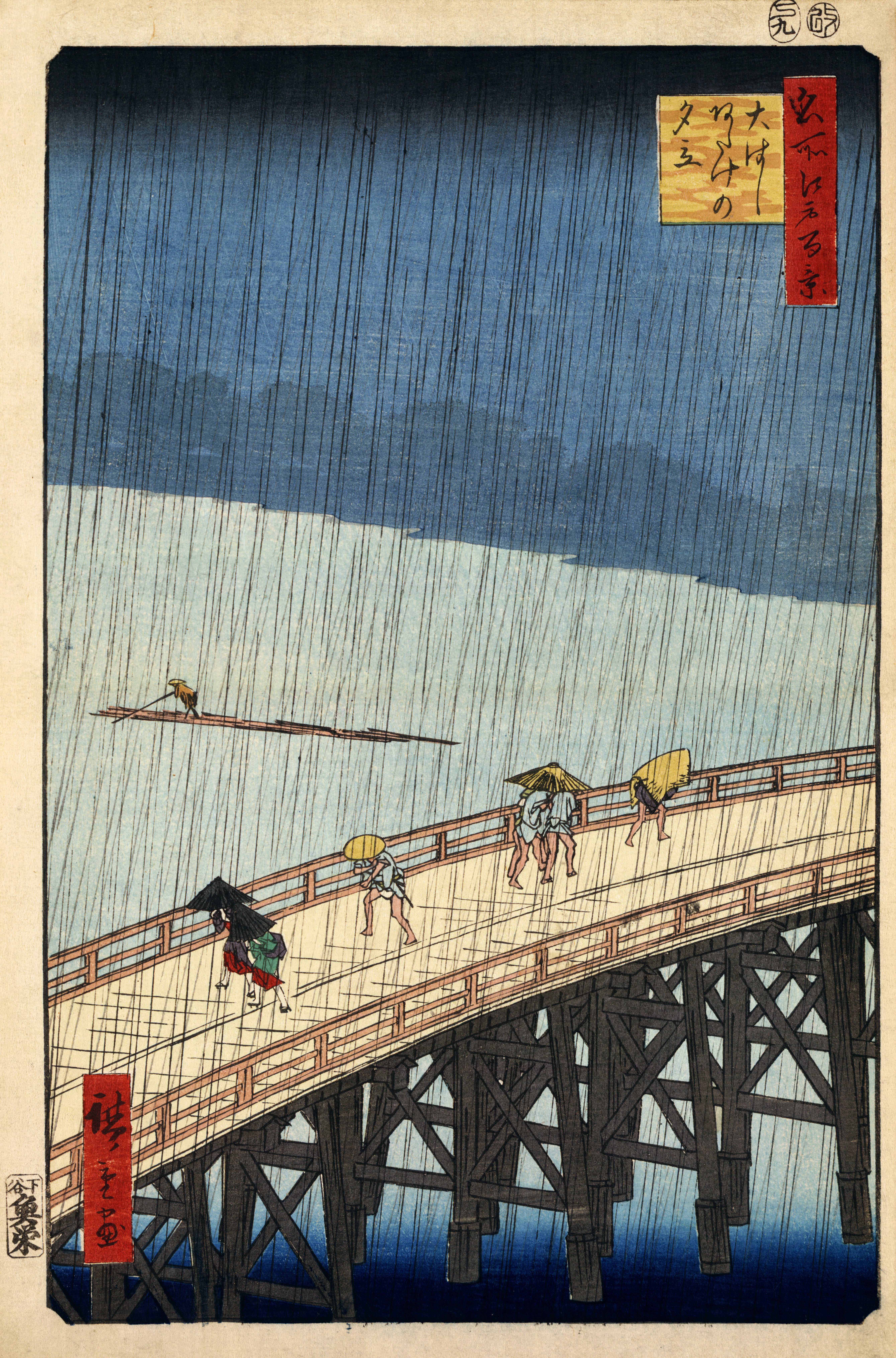
How Ukiyo-e Prints Were Made: The Woodblock Printing Process

How Ukiyo-e Prints Were Made: The Woodblock Printing Process

Looking closely at a ukiyo-e print, you start to wonder. Those razor-fine lines. The layers of color that somehow sit perfectly on top of each other. The texture of hair rendered strand by strand. How was any of this possible as a mass-produced object — something sold for the price of a bowl of noodles? Knowing how these prints were made changes the way you see them. Let me show you what was happening behind the image.1. The Big Misconception "The artist painted it" — that's the assumption most people bring to ukiyo-e. It's also one of the biggest misunderstandings about how these prints work. Ukiyo-e was a team art form. An artist drew the design. A carver cut it into wood. A printer pressed ink onto paper. A publisher organized and funded the whole operation. Four distinct roles, each requiring years of specialized skill, working in sequence to produce a single finished print. Think of it like a recording studio. The publisher is the label executive — finding talent, greenlighting projects, handling distribution. The artist is the songwriter. The carver and printer are the engineers who take the creative vision and make it physically real. The artist's name goes on the cover, but without the rest of the team, there's no music.2. The Four Roles Hanmoto (版元) — The Publisher Everything begins with the publisher. They decided what to make, commissioned the artist, paid for production, and sold the finished prints. A publisher with a stable of popular artists ran a serious business — part editor, part record label, part distributor. The most successful publishers shaped the taste of an entire era. Eshi (絵師) — The Artist The artist's job was to create the design — but specifically as a preliminary drawing, not the final print. That drawing would then be handed off to craftsmen who did the physical work of transferring it to wood and paper. The artist set the vision. Others carried it through. Horishi (彫師) — The Carver The carver traced the artist's design onto thin paper, pasted it face-down onto a cherry wood block, and carved away everything that wasn't line. Every variation in line thickness, depth, and angle was a judgment call made by hand. A single print required as many separate blocks as it had colors — sometimes ten or more. Surishi (摺師) — The Printer The printer applied ink to the carved blocks and pressed them, one by one, onto Japanese paper. Pressure, moisture, angle, alignment — tiny variations changed everything about how the finished print looked. Getting the colors to register precisely across multiple blocks was a skill that took years to master.3. Step by StepPublisher commissions the work — decides the subject, briefs the artist Artist creates the key-block drawing — outlines only, in black ink Key block is carved — the outlines are cut into the first wood block Color blocks are carved — separate blocks for each color Proof printing and correction — colors and alignment are tested; the artist may request adjustments Full production run — the same sequence repeated hundreds or thousands of timesAnd out came a print that sold for the price of a bowl of noodles.4. The Nishiki-e Revolution The full-color prints we associate with ukiyo-e weren't always possible. The technology had to be invented. Early ukiyo-e prints were single-color: black ink on white paper. Then came hand-applied color, with red and green painted in by hand after printing. Then two-color, three-color printing — each step requiring more blocks, more precision, more coordination between carver and printer. The breakthrough came in 1765, when Suzuki Harunobu produced the first true nishiki-e — "brocade picture" — using multiple precisely registered color blocks to create full, rich color prints. It was a technical revolution that unlocked the golden age of ukiyo-e, making possible the luminous colors of Utamaro, the atmospheric blues of Hiroshige, the dramatic contrasts of Hokusai.5. When Misregistration Is Actually a Good Sign Here's something collectors know that most people don't. A print with slightly misaligned colors might actually be from the earliest run — and that's considered desirable. The blocks were sharpest when first cut. But the printer was also still getting used to working with them. Early impressions (hatsuzuri) sometimes show small imperfections — a color that doesn't quite align, a line that bleeds slightly — precisely because everything was still being calibrated. Later in the run, the printer had the technique perfected, but the blocks themselves had worn down, losing the fine detail of the original carving. Which is "better" depends on what you value. But early impressions have a particular energy — a sense of the work being alive and slightly unpredictable — that later printings often lack. A single set of blocks could produce anywhere from a few hundred to several thousand impressions before the detail began to fade.6. Try It Yourself Reading about this process is one thing. Doing it is something else entirely. Several workshops in Tokyo offer hands-on woodblock printing experiences, where you carve your own block and pull your own print. The moment you try to apply even pressure across a block while keeping the paper from sliding — you understand immediately what the printers of Edo were doing, and why it took a lifetime to master.A Final Thought Knowing how ukiyo-e prints were made changes the way you stand in front of one. That line wasn't drawn — it was carved. That color wasn't painted — it was pressed, block by block, by someone who had done nothing but this for twenty years. And the whole thing was sold for the price of a bowl of noodles. The craftsmanship was extraordinary. The price was democratic. That combination — excellence made accessible — is part of what makes ukiyo-e so remarkable, even now.ReferencesThe Metropolitan Museum of Art, "Japanese Woodblock Prints" — metmuseum.org Library of Congress, "The Floating World of Ukiyo-e" — loc.gov Ellis Tinios, Japanese Prints: Ukiyo-e in Edo, 1700–1900, British Museum Press, 2010 Andreas Marks, Japanese Woodblock Prints: Artists, Publishers and Masterworks 1680–1900, Tuttle Publishing, 2010Image CreditCover image: Utagawa Hiroshige, Sudden Shower over Shin-Ōhashi Bridge and Atake, from One Hundred Famous Views of Edo, 1857 — Public domain via Wikimedia Commons