- NEW
- 25 Apr, 2026
- |
- |
-
Aiiro
Hokusai's Thirty-Six Views of Mount Fuji: A Visual Guide to All 46 Prints
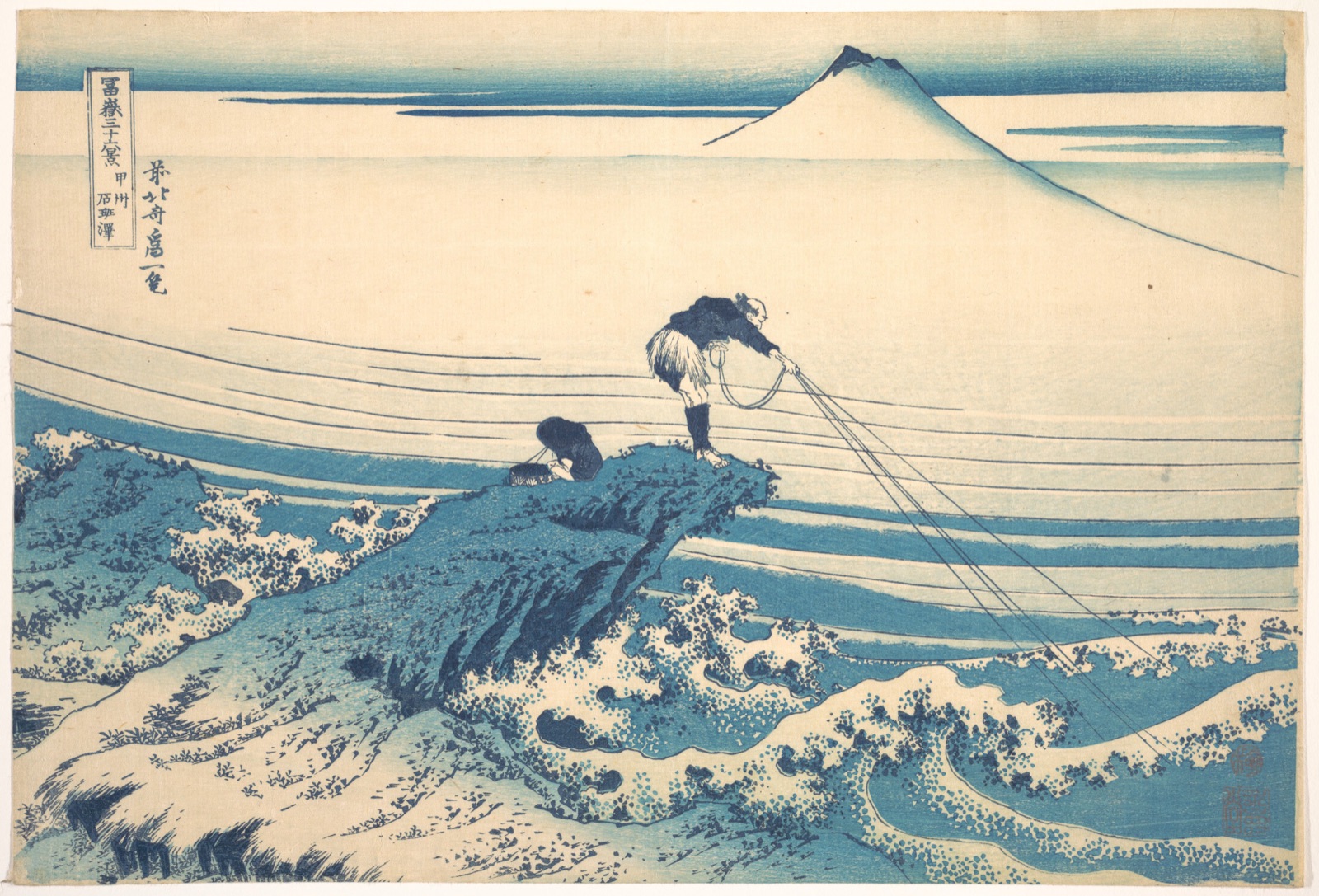
Most people who know The Great Wave don't know that it was the first print in a series of forty-six. Why was it chosen to open the series? Part of the answer lies in a color. Around 1831, when the series launched, a vivid imported pigment called bero-ai — Prussian blue, brought to Japan through Dutch trade — was sweeping through Edo. Its intensity and clarity far exceeded anything available in traditional Japanese pigments, and artists and craftspeople took to it immediately. Hokusai used this new blue to produce the color of that wave. Blue that stops the eye in an instant — The Great Wave was the perfect front cover for the series, designed to capture attention from the first moment. Thirty-Six Views of Mount Fuji is Hokusai's signature series: a collection of prints depicting the mountain from different locations, seasons, and conditions, published from 1831 onward. Today I'd like to walk through it, focusing on the prints that stay with you.1. How the Series Is Structured A quick overview before we look at individual works. The title says thirty-six views. The actual series contains forty-six prints. The first thirty-six were so popular that Hokusai added ten more — and the title stayed as it was. The two groups are known as Omote-Fuji ("Front Fuji") and Ura-Fuji ("Back Fuji"). The names come from the orientation of the mountain: the face of Fuji that Edo residents knew and recognized is the "front"; views from the other side are the "back." Omote-Fuji (the first 36 prints): Multi-color printing in bold blue and red. Strong compositions, strong colors. Ura-Fuji (the additional 10 prints): Predominantly quieter, blue-toned prints. A more subdued mood.2. Ten Prints Worth Knowing A selection from the series — the ones I keep coming back to. The Great Wave off Kanagawa — Motion and stillness The face of the series. Beneath a wave about to break, Mount Fuji sits small and still in the far distance. The contrast between the ocean's violence and the mountain's composure is as stark as it gets — and it holds. Gaifū Kaisei ("Fine Wind, Clear Morning") — Red Fuji Fuji at summer dawn, the mountain flushed red in the early light. Where The Great Wave is turbulent, this print is pure stillness. The mountain is simply there. That's enough. Sanka Hakuu ("Thunderstorm Beneath the Summit") — Black Fuji The peak in sunshine, the lower slopes in a thunderstorm. Two kinds of weather in one frame — a showcase of Hokusai's compositional intelligence. People in a storm Hats and parcels flying through the air, travelers chasing after them in the wind — a scene of comic chaos, with Fuji anchoring the background, utterly unmoved. Fuji from a riverbank A wide river, Fuji reflected and distant. The balance between the mirrored water and the hazy mountain is quietly beautiful. Fishermen and Fuji Fishermen setting nets in a river. The labor of daily life in the foreground, Fuji in the distance — a gentle comment on the relationship between human activity and the natural world. Fuji from the harbor Rooftops and boats in a fishing town, with a faint Fuji barely visible through the haze. The mountain dissolved into everyday life. The woodcutters' clearing Men working a massive tree. The closeness and scale of the timber against the smallness and distance of Fuji gives you a sense of nature's proportions. Fuji in winter with cranes A flock of cranes crossing a winter sky, Fuji standing in the stillness. A print from which all sound has been removed. Shojin Tozan (from Ura-Fuji) — Fuji from the inside Climbers ascending the mountain, seen from within — toward the dark opening of the crater. An unusually rare perspective: looking into the mountain from the inside. There's nothing else quite like it in the series.3. The Game of Finding Fuji Some prints in this series show almost no Fuji at all. A small shape in the corner of the frame, a faint outline through the haze — there are several prints where the mountain barely appears. Looking for it is its own game, and one Hokusai may have intended as a quiet joke. Try going through all forty-six with that in mind. The series takes on an extra dimension.4. Omote-Fuji and Ura-Fuji: What's the Difference? Omote-Fuji is Hokusai showing you the Fuji he wanted to show you: bold, vivid, compositionally daring. The Great Wave, Red Fuji, Black Fuji — all here. Ura-Fuji is quieter and more blue-toned — the feeling of encountering Fuji unexpectedly on a journey rather than standing before it. Less showy than Omote-Fuji, but worth the patience. Among collectors, the condition of the printing blocks and the quality of individual impressions are also points of interest across the two groups.5. How to Experience the Series In fact, seeing all forty-six prints at once is a rare opportunity. The series is spread across collections around the world, and only a portion tends to be on view at any given time. The most reliable place to start is online. The Metropolitan Museum of Art (New York) makes its holdings from Thirty-Six Views of Mount Fuji freely available in high resolution through their digital collection. The detail you can examine on screen is remarkable. For the real thing, check exhibition schedules first. The Sumida Hokusai Museum (Tokyo) and the Ōta Memorial Museum of Art (Tokyo) both show original prints from the series, but only when their exhibition programming calls for it. Always check what's on before you visit.A Final Thought Going through all forty-six prints, you sense something — a quiet, persistent compulsion to face the same mountain again and again, from every possible angle and in every possible light. Hokusai changed the season, changed the weather, changed the vantage point, placed different human lives in the foreground — and kept returning. And still, by his own account, felt he hadn't finished. You can look at any single print and find something worth holding. Or you can travel through all forty-six the way you'd travel a road — slowly, in order, watching the mountain change. Either way, the series meets you where you are.ReferencesThe Metropolitan Museum of Art, Thirty-six Views of Mount Fuji digital collection — metmuseum.org Sumida Hokusai Museum — hokusai-museum.jp Henry D. Smith II, Hokusai: One Hundred Views of Mt. Fuji, Braziller, 1988 Roger Keyes, Hokusai, Taschen, 2014Image CreditCover image: Katsushika Hokusai, Sanka Hakuu (Thunderstorm beneath the Summit / Black Fuji), from Thirty-Six Views of Mount Fuji, c. 1831 — Public domain via Wikimedia Commons
Hokusai: The Artist Who Never Stopped Learning
There was once an artist who changed his name more than thirty times in his lifetime. He also moved house ninety-three times. Why so many moves? If you could ask him, he might have laughed and said something like, "I got bored with the view." That would have been very like him. Katsushika Hokusai. The most famous ukiyo-e artist in the world, and one of the strangest geniuses who ever lived.1. A Turbulent Beginning Hokusai was born in Edo — present-day Tokyo — in 1760. He showed a gift for drawing from early childhood, and at eighteen he became an apprentice to Katsukawa Shunshō, one of the leading ukiyo-e masters of the day. But the relationship didn't last. Hokusai had talent, but he was not the type to fit neatly inside someone else's system. He was eventually expelled, and a period of self-directed learning began. For an ukiyo-e artist, this was a highly unusual situation. Rather than inheriting a master's established style, Hokusai was forced to find his own. Looking back, that necessity may have been exactly what set him free.2. His Greatest Work Came Late Most artists produce their defining works while young. Hokusai was different. The Great Wave off Kanagawa was created when Hokusai was seventy-two. The Thirty-Six Views of Mount Fuji series began after he had already entered his seventies. He had spent more than fifty years preparing. He studied under various masters, experimented with different styles, and hungrily absorbed foreign techniques. The distinctive sense of depth and perspective in his work came in part from Western copperplate engravings that reached Japan through Dutch trade routes. An artist whose real beginning came at seventy. That kind of life is possible too.3. The Man Who Called Himself "Painting-Mad Old Man" In his later years, Hokusai took to calling himself Gakyo Rojin Manji — roughly, "the old man mad about painting." This wasn't modesty, and it wasn't self-deprecation. It was a statement of pure identity. For Hokusai, making art was as natural and necessary as eating or sleeping. He never put down his brush — not until death came for him at eighty-nine. He left behind these words:"At seventy-three, I have at last caught a glimpse of the true form of birds, animals, insects, and fish, and of the way grasses and trees grow. Thus, if I keep up my efforts, by the age of eighty I will have made more progress; at ninety I will have penetrated even further into the deeper principles of things; at one hundred I will have become truly marvellous."He dreamed of painting past one hundred, and died at eighty-nine. His last words, it is said, were: "If only I had ten more years — even five."4. The Daughter We Shouldn't Forget: Ōi When we talk about Hokusai, there is another name that deserves to be spoken alongside his: his daughter, Katsushika Ōi — known by her nickname, Oi. Ōi was herself an artist of exceptional talent. She worked alongside her father, helping with commissions while producing her own work. There are accounts of her taking on client requests in his place whenever he went out. When someone once asked Hokusai which of his students showed the most promise, he reportedly answered without hesitation: "Ōi." The constraints of her era meant that her work never received the recognition it deserved during her lifetime. But in recent years, interest in Ōi's art has been quietly and steadily growing.5. The Artist Van Gogh Loved From the 1850s onward, Hokusai's prints began to make their way to Europe. Van Gogh was among those most captivated. The way Hokusai drew waves, the way he drew trees — the sharp-eyed observation and the bold composition — had a direct influence on Van Gogh's painting. He mentions Hokusai in his letters to his brother Theo more times than one can easily count. In music, too: Debussy is said to have kept a reproduction of The Great Wave beside him while composing his orchestral work La Mer. One artist's vision, traveling across the world and taking shape as music — when you trace those connections, the way art moves through history becomes something genuinely thrilling.6. Visiting Hokusai in Person In Sumida, Tokyo, there is a museum dedicated entirely to Hokusai. The Sumida Hokusai Museum stands in the same ward where Hokusai spent most of his life. The building was designed by architect Kazuyo Sejima, and it draws light into itself in the most beautiful way. The permanent collection traces Hokusai's life and work, while rotating special exhibitions allow visitors to explore particular themes in depth. There's something right about encountering Hokusai's art here, in the old shitamachi neighborhood where he lived — surrounded by the same kind of everyday Tokyo energy he drew from his whole life.A Final Thought "Genius" never quite seemed like the right word for Hokusai. He had talent, yes. But what defined him, I think, was something else: the fact that even in his seventies, he still believed he was only just beginning. A man who painted one of the most recognized images in the world — and did it after the age of seventy. Somehow, when I think about that, whatever I was about to give up on feels a little less worth giving up.ReferencesKatsushika Hokusai, One Hundred Views of Mount Fuji, afterword (1835) Sumida Hokusai Museum — hokusai-museum.jp Roger Keyes, Hokusai, Taschen, 2014 Cynthia J. Bogel, Hokusai: Beyond the Great Wave, Thames & Hudson, 2017 Timothy Clark ed., Hokusai: Beyond the Great Wave (British Museum), 2017Image CreditCover image: Katsushika Hokusai, Ejiri in Suruga Province, from Thirty-Six Views of Mount Fuji, c. 1831 — Public domain via Wikimedia Commons
How Ukiyo-e Prints Were Made: The Woodblock Printing Process
Looking closely at a ukiyo-e print, you start to wonder. Those razor-fine lines. The layers of color that somehow sit perfectly on top of each other. The texture of hair rendered strand by strand. How was any of this possible as a mass-produced object — something sold for the price of a bowl of noodles? Knowing how these prints were made changes the way you see them. Let me show you what was happening behind the image.1. The Big Misconception "The artist painted it" — that's the assumption most people bring to ukiyo-e. It's also one of the biggest misunderstandings about how these prints work. Ukiyo-e was a team art form. An artist drew the design. A carver cut it into wood. A printer pressed ink onto paper. A publisher organized and funded the whole operation. Four distinct roles, each requiring years of specialized skill, working in sequence to produce a single finished print. Think of it like a recording studio. The publisher is the label executive — finding talent, greenlighting projects, handling distribution. The artist is the songwriter. The carver and printer are the engineers who take the creative vision and make it physically real. The artist's name goes on the cover, but without the rest of the team, there's no music.2. The Four Roles Hanmoto (版元) — The Publisher Everything begins with the publisher. They decided what to make, commissioned the artist, paid for production, and sold the finished prints. A publisher with a stable of popular artists ran a serious business — part editor, part record label, part distributor. The most successful publishers shaped the taste of an entire era. Eshi (絵師) — The Artist The artist's job was to create the design — but specifically as a preliminary drawing, not the final print. That drawing would then be handed off to craftsmen who did the physical work of transferring it to wood and paper. The artist set the vision. Others carried it through. Horishi (彫師) — The Carver The carver traced the artist's design onto thin paper, pasted it face-down onto a cherry wood block, and carved away everything that wasn't line. Every variation in line thickness, depth, and angle was a judgment call made by hand. A single print required as many separate blocks as it had colors — sometimes ten or more. Surishi (摺師) — The Printer The printer applied ink to the carved blocks and pressed them, one by one, onto Japanese paper. Pressure, moisture, angle, alignment — tiny variations changed everything about how the finished print looked. Getting the colors to register precisely across multiple blocks was a skill that took years to master.3. Step by StepPublisher commissions the work — decides the subject, briefs the artist Artist creates the key-block drawing — outlines only, in black ink Key block is carved — the outlines are cut into the first wood block Color blocks are carved — separate blocks for each color Proof printing and correction — colors and alignment are tested; the artist may request adjustments Full production run — the same sequence repeated hundreds or thousands of timesAnd out came a print that sold for the price of a bowl of noodles.4. The Nishiki-e Revolution The full-color prints we associate with ukiyo-e weren't always possible. The technology had to be invented. Early ukiyo-e prints were single-color: black ink on white paper. Then came hand-applied color, with red and green painted in by hand after printing. Then two-color, three-color printing — each step requiring more blocks, more precision, more coordination between carver and printer. The breakthrough came in 1765, when Suzuki Harunobu produced the first true nishiki-e — "brocade picture" — using multiple precisely registered color blocks to create full, rich color prints. It was a technical revolution that unlocked the golden age of ukiyo-e, making possible the luminous colors of Utamaro, the atmospheric blues of Hiroshige, the dramatic contrasts of Hokusai.5. When Misregistration Is Actually a Good Sign Here's something collectors know that most people don't. A print with slightly misaligned colors might actually be from the earliest run — and that's considered desirable. The blocks were sharpest when first cut. But the printer was also still getting used to working with them. Early impressions (hatsuzuri) sometimes show small imperfections — a color that doesn't quite align, a line that bleeds slightly — precisely because everything was still being calibrated. Later in the run, the printer had the technique perfected, but the blocks themselves had worn down, losing the fine detail of the original carving. Which is "better" depends on what you value. But early impressions have a particular energy — a sense of the work being alive and slightly unpredictable — that later printings often lack. A single set of blocks could produce anywhere from a few hundred to several thousand impressions before the detail began to fade.6. Try It Yourself Reading about this process is one thing. Doing it is something else entirely. Several workshops in Tokyo offer hands-on woodblock printing experiences, where you carve your own block and pull your own print. The moment you try to apply even pressure across a block while keeping the paper from sliding — you understand immediately what the printers of Edo were doing, and why it took a lifetime to master.A Final Thought Knowing how ukiyo-e prints were made changes the way you stand in front of one. That line wasn't drawn — it was carved. That color wasn't painted — it was pressed, block by block, by someone who had done nothing but this for twenty years. And the whole thing was sold for the price of a bowl of noodles. The craftsmanship was extraordinary. The price was democratic. That combination — excellence made accessible — is part of what makes ukiyo-e so remarkable, even now.ReferencesThe Metropolitan Museum of Art, "Japanese Woodblock Prints" — metmuseum.org Library of Congress, "The Floating World of Ukiyo-e" — loc.gov Ellis Tinios, Japanese Prints: Ukiyo-e in Edo, 1700–1900, British Museum Press, 2010 Andreas Marks, Japanese Woodblock Prints: Artists, Publishers and Masterworks 1680–1900, Tuttle Publishing, 2010Image CreditCover image: Utagawa Hiroshige, Sudden Shower over Shin-Ōhashi Bridge and Atake, from One Hundred Famous Views of Edo, 1857 — Public domain via Wikimedia Commons
- 10 Apr, 2026
- |
- |
-
Aiiro
The Great Wave Explained: Everything Behind Hokusai's Most Famous Print
What is the most reproduced Japanese image in the world? The answer is Katsushika Hokusai's The Great Wave off Kanagawa. It's on mugs, T-shirts, phone cases, tote bags, and the walls of museums from Tokyo to New York. That wave has worked its way into everyday life so thoroughly that most people feel they already know it. But have you ever really looked at it? The longer you spend with this print, the more you find. The mountain you might have missed. The people in the water. The story behind why it exists at all — and who made it, and when. Let me take you through all of it.1. What's Actually In the Picture Start with the image itself. A massive wave fills the frame, its crest breaking into claw-like fingers of white foam, surging toward you with unmistakable force. That wave tends to consume the viewer's attention entirely — which is exactly why so many people miss what's sitting quietly in the background. Mount Fuji. Look carefully toward the center-right of the image, and there it is: small, serene, perfectly triangular against a pale sky. The contrast couldn't be more deliberate — a wave in violent motion, a mountain utterly still. Together they create something almost philosophical: the temporary and the permanent, the chaotic and the composed, held in a single frame. And there's one more thing. Tucked into the valleys between the waves are three long, narrow boats. The oarsmen are crouching low, pressing themselves against the hull, fighting to hold on. They're not being swept away — they're pushing back. That tension, so easy to overlook, is what keeps the whole image from tipping into despair.2. What Hokusai Was Really Doing: Observation Those claw-like tips of the wave — most people assume at first that they must be exaggerated. But Hokusai spent decades observing the sea and drawing it relentlessly. That shape was not invented. It was studied. The wave in the picture is an offshore ocean swell — the kind that fishermen genuinely faced when they headed out to sea. The three boats nestled in the troughs are not being swept away; they are pressing back. What Hokusai captured may be less about the ocean's force and more about the tension between the sea and the people who work it.3. It's One Print in a Series of Forty-Six Here's something that surprises most people: The Great Wave was never meant to stand alone. It's the opening print of a series called Thirty-Six Views of Mount Fuji — a collection exploring Fuji from different locations, seasons, distances, and weather conditions. Spring and winter. Storm and clear sky. From the coast, from the mountains, from the middle of the city. Here's a small charming detail: the series was so popular that Hokusai added ten more prints beyond the original thirty-six. So Thirty-Six Views actually contains forty-six images. The title stayed. Nobody seemed to mind. The Great Wave became the face of the series, but many of the other prints are extraordinary in their own right — and well worth finding.4. Hokusai Was in His Seventies When He Made It This is my favorite fact about this print. The Great Wave was made around 1831. Hokusai was in his early seventies. He had been painting for over sixty years by then. Six decades of practice, observation, and refinement went into that image. And yet Hokusai, looking back at his life's work, wrote this:"Everything I produced before the age of seventy is not worth taking into account. At seventy-three, I began to grasp the structures of birds and beasts, insects and fish, and the way plants grow. If I go on trying, I will surely understand them still better by the time I am eighty-six."When I first read those words, something shifted in me. The person who made one of the most recognized images in human history thought, at seventy, that he was just getting started.5. How One Print Changed Western Art The Great Wave reached Europe in the decades following Japan's opening to trade in the 1850s. What happened next is one of the most remarkable stories in art history. Western painters were stunned. Everything about Hokusai's image contradicted the conventions of European academic art: the flat planes of color, the bold outlines, the radical compression of space, the sense of caught movement. It was a visual language they had never encountered — and it opened doors they hadn't known existed.Van Gogh wrote to his brother Theo that Hokusai's waves were "like claws," and the influence runs throughout his later work — in the swirling skies, the bold outlines, the vibrating intensity of color Debussy kept a reproduction of The Great Wave beside him while composing La Mer (1905). He used the image on the cover of the first edition score, making the connection explicit Klimt and other Art Nouveau artists absorbed the decorative line quality and flattened forms of ukiyo-e into the foundations of their styleOne woodblock print, and it sent ripples through painting, music, and design.6. Where to See It Original prints of The Great Wave are scattered across museum collections worldwide. Here's where you can find them. In Tokyo:Sumida Hokusai Museum (Sumida) — dedicated entirely to Hokusai; original prints shown in special exhibitions Ota Memorial Museum of Art (Harajuku) — ukiyo-e specialists with regular Hokusai exhibitionsInternationally:The British Museum (London) — holds a fine original impression The Metropolitan Museum of Art (New York) — owns multiple versions; high-resolution images free via their online collection Bibliothèque nationale de France (Paris) — holds an impression from Debussy's eraThe Great Wave is in the public domain, so reproductions are sold worldwide at every price point.A Final Thought The Great Wave is one of those rare images that reveals something new each time you look at it. The wave is still moving — forever on the verge of breaking, never quite breaking. The oarsmen are still holding on. Fuji is still watching, unmoved. And somewhere in the folds of time, a man in his seventies was pressing a freshly inked block onto paper, thinking there was still so much left to learn. Two hundred years later, that print is still arriving.References Primary SourcesKatsushika Hokusai, postscript to One Hundred Views of Mount Fuji, Vol. 3 (1835) Claude Debussy, La Mer first edition score cover (1905) — Bibliothèque nationale de FranceMuseum & Institutional ResourcesThe Metropolitan Museum of Art — metmuseum.org The British Museum — britishmuseum.org Sumida Hokusai Museum — hokusai-museum.jpFurther ReadingCynthia J. Bogel, Hokusai: Beyond the Great Wave, Thames & Hudson, 2017 Timothy Clark ed., Hokusai: Beyond the Great Wave (British Museum), 2017 Roger Keyes, Hokusai, Taschen, 2014Image CreditCover image: Katsushika Hokusai, The Great Wave off Kanagawa, from Thirty-Six Views of Mount Fuji, c. 1831 — Public domain via Wikimedia Commons
- 01 Apr, 2026
- |
- |
-
Aiiro
What is Ukiyo-e? A Complete Beginner's Guide
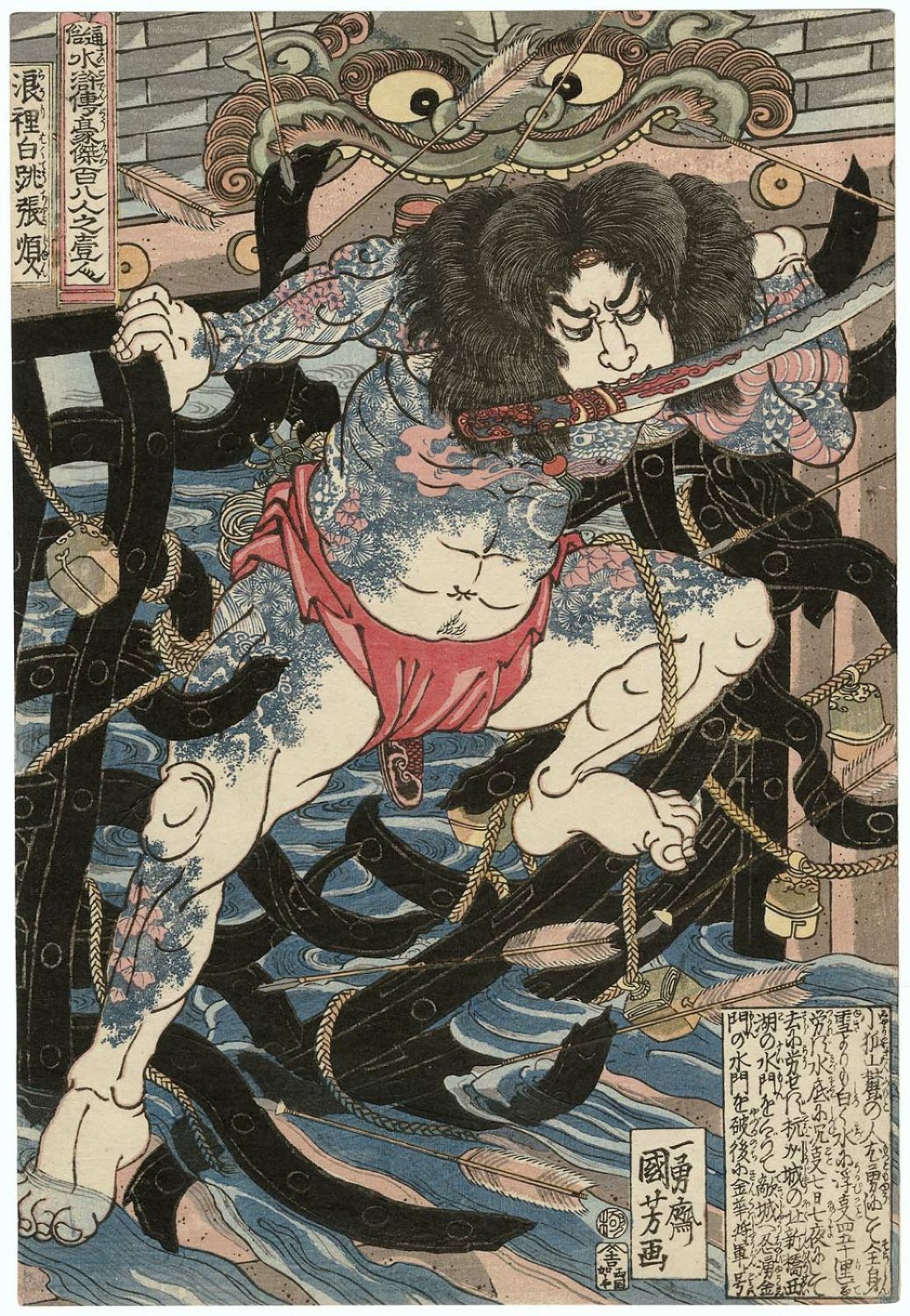
Have you ever seen The Great Wave off Kanagawa? That image of a towering wave about to crash, with Mount Fuji tiny in the background. Even if you've never set foot in an art museum, chances are you've come across it somewhere. What you may not know is that it's a woodblock print — one piece of a rich artistic tradition called ukiyo-e. But ukiyo-e is so much more than that single wave. For over two centuries, it was the heartbeat of everyday life in Japan. Then it crossed the ocean, stunned the likes of Van Gogh and Monet, and quietly rewired the course of Western art. Not bad for something that cost about as much as a bowl of noodles. Let me take you into this world from the very beginning.1. What Does "Ukiyo" Actually Mean? Let's start with the word itself. Ukiyo-e (浮世絵) literally means "pictures of the floating world." But to understand that, you first need to sit with the word ukiyo — because it carries a story of its own. Originally, the word was written as 憂き世 (uki-yo): a world of suffering, impermanence, and sorrow. A Buddhist concept, really — life as something fleeting and painful, something to be transcended rather than embraced. Then the Edo period arrived (1603–1868), and something shifted. The characters changed to 浮世, same pronunciation, entirely different feeling: a world to float through with pleasure, to enjoy right now, in this very moment. If life is going to be short anyway — why not make it beautiful? That small but radical reframing unleashed an entire culture. And ukiyo-e was born to capture it — the fashions, the faces, the fleeting moments of a city fully alive."To live in the moment, to savor the moon, the snow, the cherry blossoms — that is ukiyo." — Asai Ryōi, Tales of the Floating World (1661)2. Ukiyo-e Was Edo's Pop Culture Here's something that surprises almost everyone: ukiyo-e prints were not luxury items. A single print cost roughly the same as a bowl of soba noodles — the equivalent of maybe a few dollars today. Merchants, craftsmen, and ordinary townspeople could buy them, bring them home, and hang them on their walls. Think posters, or magazine spreads. That was ukiyo-e. What made this possible was a remarkably sophisticated division of labor:Eshi (絵師) — the artist who created the design Horishi (彫師) — the carver who transferred it onto wooden blocks Surishi (摺師) — the printer who applied ink and pressed paper Hanmoto (版元) — the publisher who financed and distributed everythingIt's not unlike a modern record label. The publisher scouted and signed talent, managed the production pipeline, and got the finished work into people's hands. The artist was the face. The system was the machine. Ukiyo-e is often described as "high art," and in retrospect, perhaps it is. But in its own time, it was something far more interesting — the vibrant, commercial, wonderfully populist media of its day.3. How the Themes Evolved: Beauty, Stage, Nature Over its long history, ukiyo-e kept reinventing itself. Follow the arc of its subjects and you start to feel the pulse of the Edo era itself. Early period — Bijin-ga (美人画): Portraits of beautiful women The art form found its first audience through images of courtesans, geisha, and fashionable townswomen. Artists like Suzuki Harunobu and Kitagawa Utamaro made their names here. These women were the celebrities of their age — and people collected their portraits with the same enthusiasm fans bring to idols today. Middle period — Yakusha-e (役者絵): Kabuki actor prints As kabuki theater grew into a cultural phenomenon, prints of beloved actors became must-haves. Imagine buying a poster of your favorite performer — that was the feeling. This is also when one of ukiyo-e's most enduring mysteries appeared: Tōshūsai Sharaku. He produced over 140 striking actor portraits — psychologically intense, almost unsettlingly perceptive — and then, after just ten months, vanished completely. His true identity has never been confirmed. Late period — Fūkeiga (風景画): Landscapes And then came the twist no one expected. Government censorship. The Tenpō Reforms of the 1840s banned images of kabuki actors and courtesans as morally corrupting. With their usual subjects off-limits, artists turned their gaze outward — to mountains, rivers, coastal roads, and open skies. That shift gave us The Great Wave. Censorship, of all things, pushed ukiyo-e toward its most celebrated work. History has a strange sense of humor.4. The Artists Worth Knowing You don't need to memorize every name. But these six shaped the art form — and each one is unforgettable in their own way. Suzuki Harunobu (1725–1770) The pioneer of nishiki-e, full-color woodblock printing using multiple blocks. Before Harunobu, prints were mostly two or three colors. He opened the door to everything that followed. Kitagawa Utamaro (1753–1806) The undisputed master of bijin-ga. His close-up portraits of women captured something beyond beauty — a sense of inner life, of thought and feeling. Even now, his figures hold your gaze. Tōshūsai Sharaku (active 1794–1795) Ten months. Over 140 prints. Then gone. No one knows who he really was. The mystery is part of the portrait. Katsushika Hokusai (1760–1849) Creator of The Great Wave and Thirty-Six Views of Mount Fuji. He kept working until he was 89, and reportedly said that he only began to truly understand nature at 70. A reminder that some artists take the long view. Utagawa Hiroshige (1797–1858) Where Hokusai was dramatic, Hiroshige was lyrical. His Fifty-three Stations of the Tōkaidō — all rain and mist and quiet melancholy — moved Van Gogh deeply enough to paint direct copies in oil. Utagawa Kuniyoshi (1797–1861) The rebel of the group. Known for bold warrior prints and wildly inventive compositions — including one famous image where dozens of tiny naked figures pile together to form the shape of Daruma. He pushed against censorship at every turn, with wit and barely concealed defiance.5. The Day Ukiyo-e Changed Western Art In 1853, Commodore Perry's ships arrived and Japan opened its ports after centuries of isolation. Among the goods that flowed westward in the years that followed: ukiyo-e prints. The effect on European artists was immediate and profound. Everything about ukiyo-e contradicted what European academic painting had trained them to value. Flat planes of color instead of careful shading. Bold outlines instead of blended transitions. Asymmetrical compositions, radical cropping, subjects caught mid-motion rather than posed. It was, for many of them, like seeing clearly for the first time.Van Gogh painted direct copies of Hiroshige's rain scenes in oil, and wrote to his brother: "These prints... are as refreshing as spring." Monet collected over 200 ukiyo-e prints and built a Japanese-style bridge in his garden at Giverny — the one he painted obsessively for the rest of his life. Degas borrowed ukiyo-e's off-center framing and unconventional angles for his scenes of dancers.This cultural current became known as Japonisme, and its influence runs through Impressionism, Art Nouveau, and the foundations of modern graphic design. There's a quiet irony in all of this: by the time ukiyo-e was transforming Paris, it had already fallen out of fashion in Japan. The Japanese had to learn the value of what they'd made from halfway around the world.6. Where to See Ukiyo-e Today Ukiyo-e isn't locked away in archives. You can stand in front of these works — and feel them. In Tokyo:Ota Memorial Museum of Art (Harajuku) — Japan's finest ukiyo-e specialist museum, with a rotating collection drawn from over 12,000 works. A quiet, intimate space that rewards slow looking. Sumida Hokusai Museum — dedicated entirely to Hokusai's life and work. The building itself, designed by architect Kazuyo Sejima, is worth seeing. Tokyo National Museum (Ueno) — one of the world's great collections, with ukiyo-e holdings that could take days to properly explore.Beyond Japan:The Metropolitan Museum of Art (New York) — over 5,000 Japanese prints, many accessible through their online collection. The British Museum (London) — exceptional holdings including rare early works and important pieces from every major period.A Final Thought Ukiyo-e came from a simple conviction: that fleeting moments are worth preserving. A wave. A woman caught adjusting her robe. An actor's face in the middle of a performance. These ordinary, passing things — someone decided they deserved to last. Centuries later, they still do. Whether you're encountering Hokusai for the first time, or looking for a way deeper into Japan's artistic soul — ukiyo-e is a door worth walking through. I hope this is a place you'll want to keep returning to.References Primary SourcesAsai Ryōi, Tales of the Floating World (Ukiyo Monogatari, 1661) Vincent van Gogh, letters to Theo van Gogh (1888) — Van Gogh MuseumMuseum & Institutional ResourcesThe Metropolitan Museum of Art, "Ukiyo-e" — metmuseum.org The British Museum, Japanese prints collection — britishmuseum.org Library of Congress, "The Floating World of Ukiyo-e" — loc.gov Ota Memorial Museum of Art — ukiyoe-ota-muse.jp Sumida Hokusai Museum — hokusai-museum.jp Tokyo National Museum — tnm.jpFurther ReadingFrederick Harris, Ukiyo-e: The Art of the Japanese Print, Tuttle Publishing, 2011 Gian Carlo Calza, Ukiyo-e, Phaidon Press, 2003 Sandy Kita et al., Floating World of Ukiyo-E: Shadows, Dreams and Substance, Abrams, 2001Image CreditCover image: Katsushika Hokusai, Gaifū Kaisei (Fine Wind, Clear Morning / Red Fuji), from Thirty-Six Views of Mount Fuji, c. 1831 — Public domain via Wikimedia Commons