Showing Posts From

Artist
Hokusai: The Artist Who Never Stopped Learning

Hokusai: The Artist Who Never Stopped Learning

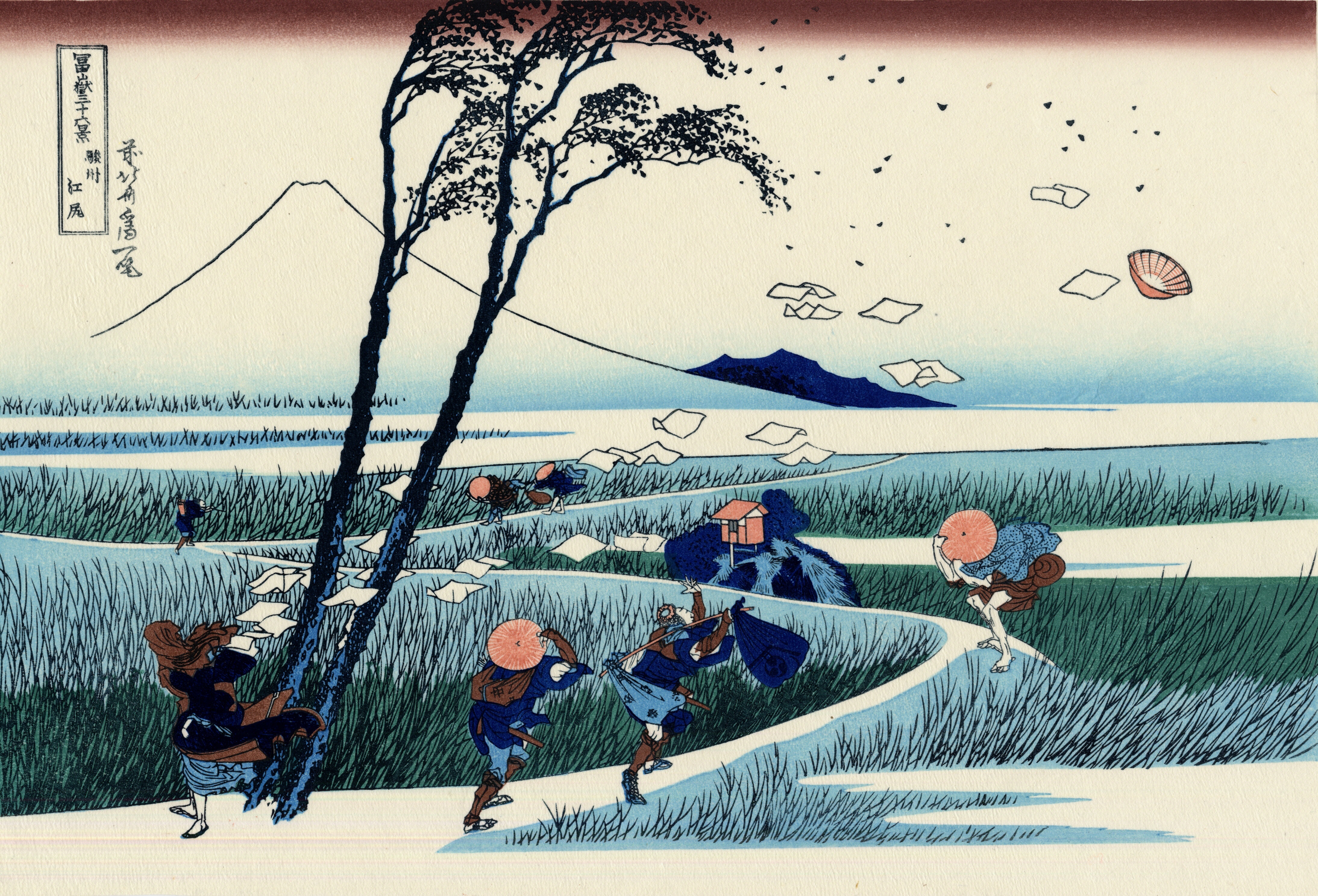
There was once an artist who changed his name more than thirty times in his lifetime. He also moved house ninety-three times. Why so many moves? If you could ask him, he might have laughed and said something like, "I got bored with the view." That would have been very like him. Katsushika Hokusai. The most famous ukiyo-e artist in the world, and one of the strangest geniuses who ever lived.1. A Turbulent Beginning Hokusai was born in Edo — present-day Tokyo — in 1760. He showed a gift for drawing from early childhood, and at eighteen he became an apprentice to Katsukawa Shunshō, one of the leading ukiyo-e masters of the day. But the relationship didn't last. Hokusai had talent, but he was not the type to fit neatly inside someone else's system. He was eventually expelled, and a period of self-directed learning began. For an ukiyo-e artist, this was a highly unusual situation. Rather than inheriting a master's established style, Hokusai was forced to find his own. Looking back, that necessity may have been exactly what set him free.2. His Greatest Work Came Late Most artists produce their defining works while young. Hokusai was different. The Great Wave off Kanagawa was created when Hokusai was seventy-two. The Thirty-Six Views of Mount Fuji series began after he had already entered his seventies. He had spent more than fifty years preparing. He studied under various masters, experimented with different styles, and hungrily absorbed foreign techniques. The distinctive sense of depth and perspective in his work came in part from Western copperplate engravings that reached Japan through Dutch trade routes. An artist whose real beginning came at seventy. That kind of life is possible too.3. The Man Who Called Himself "Painting-Mad Old Man" In his later years, Hokusai took to calling himself Gakyo Rojin Manji — roughly, "the old man mad about painting." This wasn't modesty, and it wasn't self-deprecation. It was a statement of pure identity. For Hokusai, making art was as natural and necessary as eating or sleeping. He never put down his brush — not until death came for him at eighty-nine. He left behind these words:"At seventy-three, I have at last caught a glimpse of the true form of birds, animals, insects, and fish, and of the way grasses and trees grow. Thus, if I keep up my efforts, by the age of eighty I will have made more progress; at ninety I will have penetrated even further into the deeper principles of things; at one hundred I will have become truly marvellous."He dreamed of painting past one hundred, and died at eighty-nine. His last words, it is said, were: "If only I had ten more years — even five."4. The Daughter We Shouldn't Forget: Ōi When we talk about Hokusai, there is another name that deserves to be spoken alongside his: his daughter, Katsushika Ōi — known by her nickname, Oi. Ōi was herself an artist of exceptional talent. She worked alongside her father, helping with commissions while producing her own work. There are accounts of her taking on client requests in his place whenever he went out. When someone once asked Hokusai which of his students showed the most promise, he reportedly answered without hesitation: "Ōi." The constraints of her era meant that her work never received the recognition it deserved during her lifetime. But in recent years, interest in Ōi's art has been quietly and steadily growing.5. The Artist Van Gogh Loved From the 1850s onward, Hokusai's prints began to make their way to Europe. Van Gogh was among those most captivated. The way Hokusai drew waves, the way he drew trees — the sharp-eyed observation and the bold composition — had a direct influence on Van Gogh's painting. He mentions Hokusai in his letters to his brother Theo more times than one can easily count. In music, too: Debussy is said to have kept a reproduction of The Great Wave beside him while composing his orchestral work La Mer. One artist's vision, traveling across the world and taking shape as music — when you trace those connections, the way art moves through history becomes something genuinely thrilling.6. Visiting Hokusai in Person In Sumida, Tokyo, there is a museum dedicated entirely to Hokusai. The Sumida Hokusai Museum stands in the same ward where Hokusai spent most of his life. The building was designed by architect Kazuyo Sejima, and it draws light into itself in the most beautiful way. The permanent collection traces Hokusai's life and work, while rotating special exhibitions allow visitors to explore particular themes in depth. There's something right about encountering Hokusai's art here, in the old shitamachi neighborhood where he lived — surrounded by the same kind of everyday Tokyo energy he drew from his whole life.A Final Thought "Genius" never quite seemed like the right word for Hokusai. He had talent, yes. But what defined him, I think, was something else: the fact that even in his seventies, he still believed he was only just beginning. A man who painted one of the most recognized images in the world — and did it after the age of seventy. Somehow, when I think about that, whatever I was about to give up on feels a little less worth giving up.ReferencesKatsushika Hokusai, One Hundred Views of Mount Fuji, afterword (1835) Sumida Hokusai Museum — hokusai-museum.jp Roger Keyes, Hokusai, Taschen, 2014 Cynthia J. Bogel, Hokusai: Beyond the Great Wave, Thames & Hudson, 2017 Timothy Clark ed., Hokusai: Beyond the Great Wave (British Museum), 2017Image CreditCover image: Katsushika Hokusai, Ejiri in Suruga Province, from Thirty-Six Views of Mount Fuji, c. 1831 — Public domain via Wikimedia Commons