Showing Posts From

Great wave
Hokusai: The Artist Who Never Stopped Learning

Hokusai: The Artist Who Never Stopped Learning

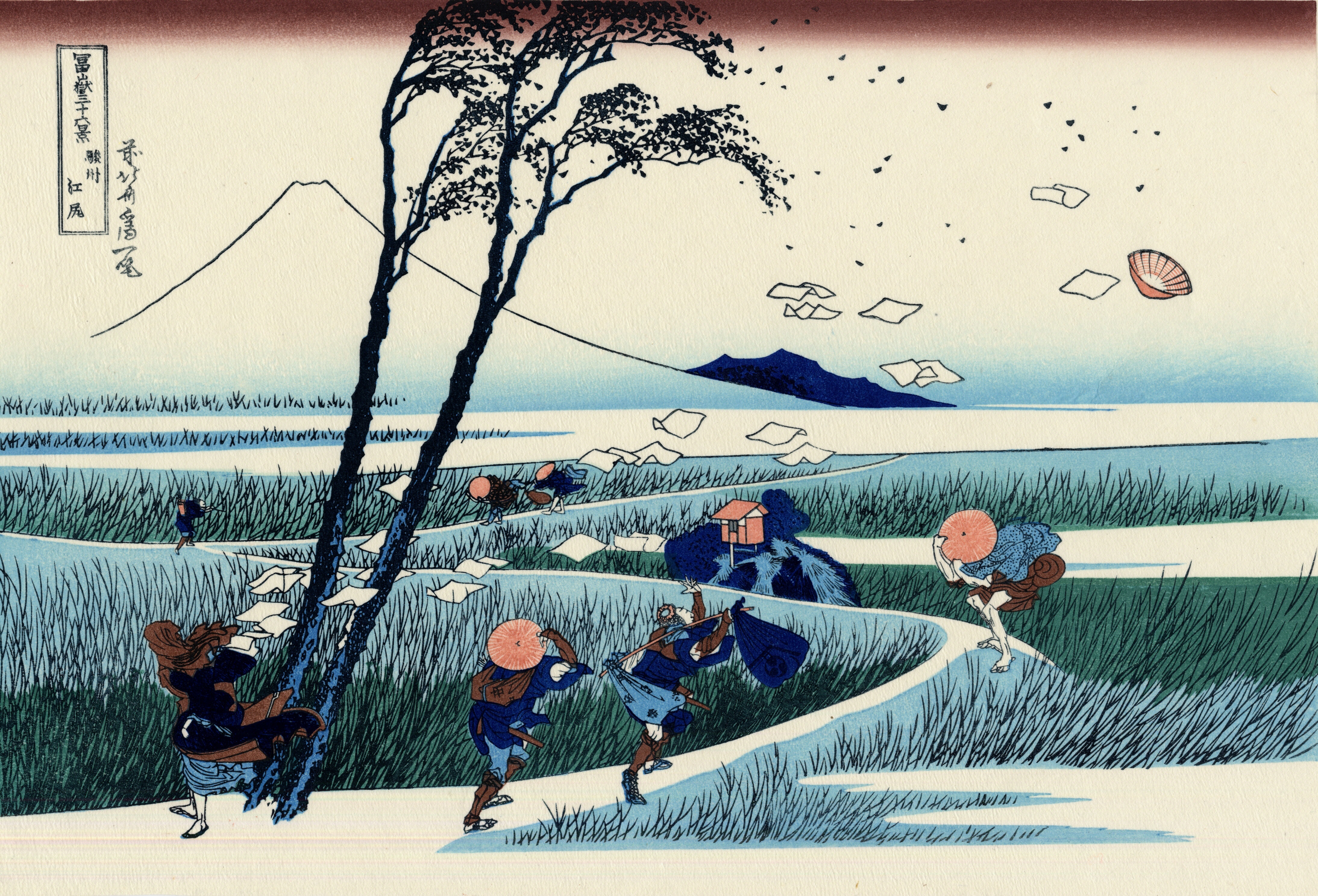
There was once an artist who changed his name more than thirty times in his lifetime. He also moved house ninety-three times. Why so many moves? If you could ask him, he might have laughed and said something like, "I got bored with the view." That would have been very like him. Katsushika Hokusai. The most famous ukiyo-e artist in the world, and one of the strangest geniuses who ever lived.1. A Turbulent Beginning Hokusai was born in Edo — present-day Tokyo — in 1760. He showed a gift for drawing from early childhood, and at eighteen he became an apprentice to Katsukawa Shunshō, one of the leading ukiyo-e masters of the day. But the relationship didn't last. Hokusai had talent, but he was not the type to fit neatly inside someone else's system. He was eventually expelled, and a period of self-directed learning began. For an ukiyo-e artist, this was a highly unusual situation. Rather than inheriting a master's established style, Hokusai was forced to find his own. Looking back, that necessity may have been exactly what set him free.2. His Greatest Work Came Late Most artists produce their defining works while young. Hokusai was different. The Great Wave off Kanagawa was created when Hokusai was seventy-two. The Thirty-Six Views of Mount Fuji series began after he had already entered his seventies. He had spent more than fifty years preparing. He studied under various masters, experimented with different styles, and hungrily absorbed foreign techniques. The distinctive sense of depth and perspective in his work came in part from Western copperplate engravings that reached Japan through Dutch trade routes. An artist whose real beginning came at seventy. That kind of life is possible too.3. The Man Who Called Himself "Painting-Mad Old Man" In his later years, Hokusai took to calling himself Gakyo Rojin Manji — roughly, "the old man mad about painting." This wasn't modesty, and it wasn't self-deprecation. It was a statement of pure identity. For Hokusai, making art was as natural and necessary as eating or sleeping. He never put down his brush — not until death came for him at eighty-nine. He left behind these words:"At seventy-three, I have at last caught a glimpse of the true form of birds, animals, insects, and fish, and of the way grasses and trees grow. Thus, if I keep up my efforts, by the age of eighty I will have made more progress; at ninety I will have penetrated even further into the deeper principles of things; at one hundred I will have become truly marvellous."He dreamed of painting past one hundred, and died at eighty-nine. His last words, it is said, were: "If only I had ten more years — even five."4. The Daughter We Shouldn't Forget: Ōi When we talk about Hokusai, there is another name that deserves to be spoken alongside his: his daughter, Katsushika Ōi — known by her nickname, Oi. Ōi was herself an artist of exceptional talent. She worked alongside her father, helping with commissions while producing her own work. There are accounts of her taking on client requests in his place whenever he went out. When someone once asked Hokusai which of his students showed the most promise, he reportedly answered without hesitation: "Ōi." The constraints of her era meant that her work never received the recognition it deserved during her lifetime. But in recent years, interest in Ōi's art has been quietly and steadily growing.5. The Artist Van Gogh Loved From the 1850s onward, Hokusai's prints began to make their way to Europe. Van Gogh was among those most captivated. The way Hokusai drew waves, the way he drew trees — the sharp-eyed observation and the bold composition — had a direct influence on Van Gogh's painting. He mentions Hokusai in his letters to his brother Theo more times than one can easily count. In music, too: Debussy is said to have kept a reproduction of The Great Wave beside him while composing his orchestral work La Mer. One artist's vision, traveling across the world and taking shape as music — when you trace those connections, the way art moves through history becomes something genuinely thrilling.6. Visiting Hokusai in Person In Sumida, Tokyo, there is a museum dedicated entirely to Hokusai. The Sumida Hokusai Museum stands in the same ward where Hokusai spent most of his life. The building was designed by architect Kazuyo Sejima, and it draws light into itself in the most beautiful way. The permanent collection traces Hokusai's life and work, while rotating special exhibitions allow visitors to explore particular themes in depth. There's something right about encountering Hokusai's art here, in the old shitamachi neighborhood where he lived — surrounded by the same kind of everyday Tokyo energy he drew from his whole life.A Final Thought "Genius" never quite seemed like the right word for Hokusai. He had talent, yes. But what defined him, I think, was something else: the fact that even in his seventies, he still believed he was only just beginning. A man who painted one of the most recognized images in the world — and did it after the age of seventy. Somehow, when I think about that, whatever I was about to give up on feels a little less worth giving up.ReferencesKatsushika Hokusai, One Hundred Views of Mount Fuji, afterword (1835) Sumida Hokusai Museum — hokusai-museum.jp Roger Keyes, Hokusai, Taschen, 2014 Cynthia J. Bogel, Hokusai: Beyond the Great Wave, Thames & Hudson, 2017 Timothy Clark ed., Hokusai: Beyond the Great Wave (British Museum), 2017Image CreditCover image: Katsushika Hokusai, Ejiri in Suruga Province, from Thirty-Six Views of Mount Fuji, c. 1831 — Public domain via Wikimedia Commons

The Great Wave Explained: Everything Behind Hokusai's Most Famous Print

The Great Wave Explained: Everything Behind Hokusai's Most Famous Print

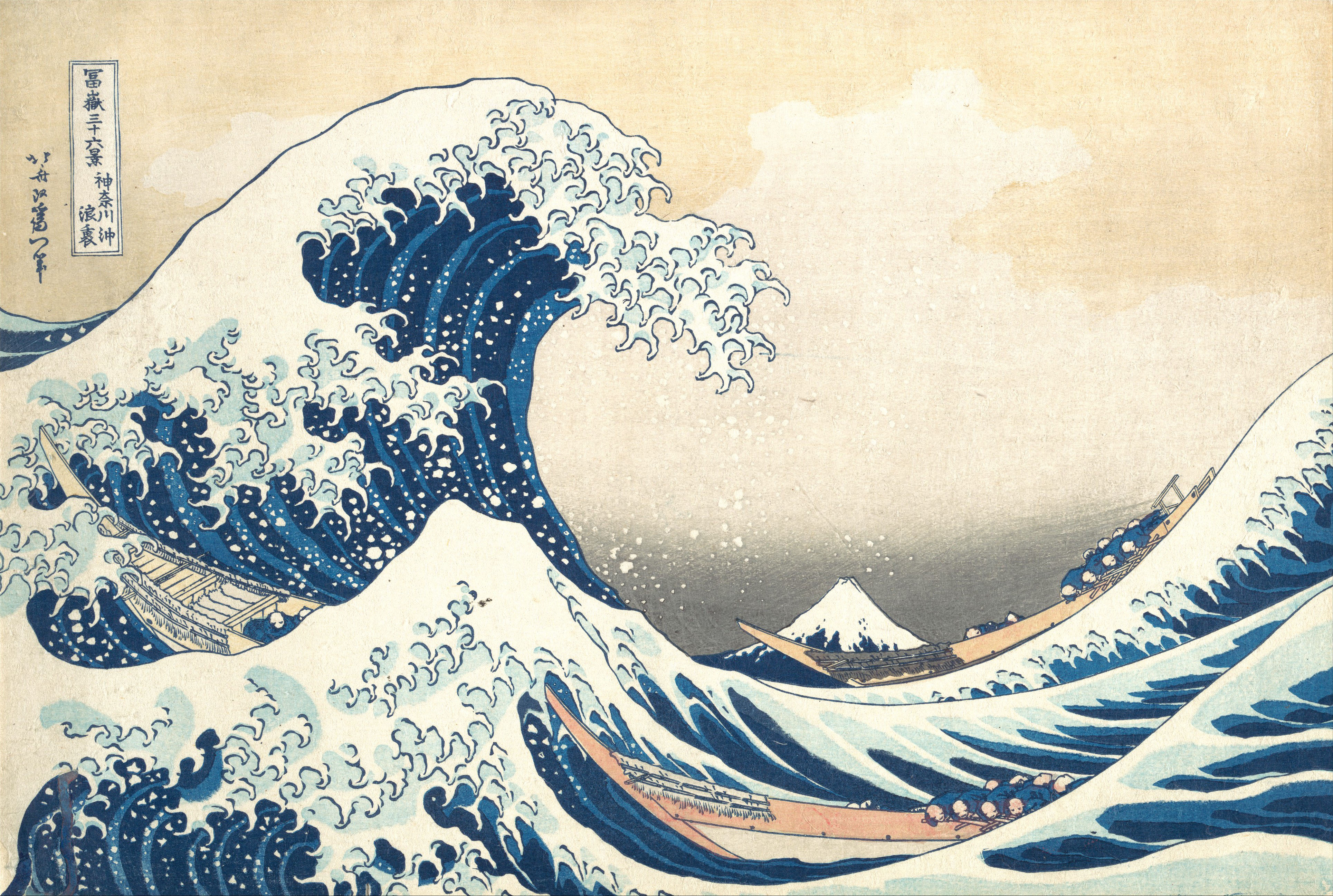
What is the most reproduced Japanese image in the world? The answer is Katsushika Hokusai's The Great Wave off Kanagawa. It's on mugs, T-shirts, phone cases, tote bags, and the walls of museums from Tokyo to New York. That wave has worked its way into everyday life so thoroughly that most people feel they already know it. But have you ever really looked at it? The longer you spend with this print, the more you find. The mountain you might have missed. The people in the water. The story behind why it exists at all — and who made it, and when. Let me take you through all of it.1. What's Actually In the Picture Start with the image itself. A massive wave fills the frame, its crest breaking into claw-like fingers of white foam, surging toward you with unmistakable force. That wave tends to consume the viewer's attention entirely — which is exactly why so many people miss what's sitting quietly in the background. Mount Fuji. Look carefully toward the center-right of the image, and there it is: small, serene, perfectly triangular against a pale sky. The contrast couldn't be more deliberate — a wave in violent motion, a mountain utterly still. Together they create something almost philosophical: the temporary and the permanent, the chaotic and the composed, held in a single frame. And there's one more thing. Tucked into the valleys between the waves are three long, narrow boats. The oarsmen are crouching low, pressing themselves against the hull, fighting to hold on. They're not being swept away — they're pushing back. That tension, so easy to overlook, is what keeps the whole image from tipping into despair.2. What Hokusai Was Really Doing: Observation Those claw-like tips of the wave — most people assume at first that they must be exaggerated. But Hokusai spent decades observing the sea and drawing it relentlessly. That shape was not invented. It was studied. The wave in the picture is an offshore ocean swell — the kind that fishermen genuinely faced when they headed out to sea. The three boats nestled in the troughs are not being swept away; they are pressing back. What Hokusai captured may be less about the ocean's force and more about the tension between the sea and the people who work it.3. It's One Print in a Series of Forty-Six Here's something that surprises most people: The Great Wave was never meant to stand alone. It's the opening print of a series called Thirty-Six Views of Mount Fuji — a collection exploring Fuji from different locations, seasons, distances, and weather conditions. Spring and winter. Storm and clear sky. From the coast, from the mountains, from the middle of the city. Here's a small charming detail: the series was so popular that Hokusai added ten more prints beyond the original thirty-six. So Thirty-Six Views actually contains forty-six images. The title stayed. Nobody seemed to mind. The Great Wave became the face of the series, but many of the other prints are extraordinary in their own right — and well worth finding.4. Hokusai Was in His Seventies When He Made It This is my favorite fact about this print. The Great Wave was made around 1831. Hokusai was in his early seventies. He had been painting for over sixty years by then. Six decades of practice, observation, and refinement went into that image. And yet Hokusai, looking back at his life's work, wrote this:"Everything I produced before the age of seventy is not worth taking into account. At seventy-three, I began to grasp the structures of birds and beasts, insects and fish, and the way plants grow. If I go on trying, I will surely understand them still better by the time I am eighty-six."When I first read those words, something shifted in me. The person who made one of the most recognized images in human history thought, at seventy, that he was just getting started.5. How One Print Changed Western Art The Great Wave reached Europe in the decades following Japan's opening to trade in the 1850s. What happened next is one of the most remarkable stories in art history. Western painters were stunned. Everything about Hokusai's image contradicted the conventions of European academic art: the flat planes of color, the bold outlines, the radical compression of space, the sense of caught movement. It was a visual language they had never encountered — and it opened doors they hadn't known existed.Van Gogh wrote to his brother Theo that Hokusai's waves were "like claws," and the influence runs throughout his later work — in the swirling skies, the bold outlines, the vibrating intensity of color Debussy kept a reproduction of The Great Wave beside him while composing La Mer (1905). He used the image on the cover of the first edition score, making the connection explicit Klimt and other Art Nouveau artists absorbed the decorative line quality and flattened forms of ukiyo-e into the foundations of their styleOne woodblock print, and it sent ripples through painting, music, and design.6. Where to See It Original prints of The Great Wave are scattered across museum collections worldwide. Here's where you can find them. In Tokyo:Sumida Hokusai Museum (Sumida) — dedicated entirely to Hokusai; original prints shown in special exhibitions Ota Memorial Museum of Art (Harajuku) — ukiyo-e specialists with regular Hokusai exhibitionsInternationally:The British Museum (London) — holds a fine original impression The Metropolitan Museum of Art (New York) — owns multiple versions; high-resolution images free via their online collection Bibliothèque nationale de France (Paris) — holds an impression from Debussy's eraThe Great Wave is in the public domain, so reproductions are sold worldwide at every price point.A Final Thought The Great Wave is one of those rare images that reveals something new each time you look at it. The wave is still moving — forever on the verge of breaking, never quite breaking. The oarsmen are still holding on. Fuji is still watching, unmoved. And somewhere in the folds of time, a man in his seventies was pressing a freshly inked block onto paper, thinking there was still so much left to learn. Two hundred years later, that print is still arriving.References Primary SourcesKatsushika Hokusai, postscript to One Hundred Views of Mount Fuji, Vol. 3 (1835) Claude Debussy, La Mer first edition score cover (1905) — Bibliothèque nationale de FranceMuseum & Institutional ResourcesThe Metropolitan Museum of Art — metmuseum.org The British Museum — britishmuseum.org Sumida Hokusai Museum — hokusai-museum.jpFurther ReadingCynthia J. Bogel, Hokusai: Beyond the Great Wave, Thames & Hudson, 2017 Timothy Clark ed., Hokusai: Beyond the Great Wave (British Museum), 2017 Roger Keyes, Hokusai, Taschen, 2014Image CreditCover image: Katsushika Hokusai, The Great Wave off Kanagawa, from Thirty-Six Views of Mount Fuji, c. 1831 — Public domain via Wikimedia Commons